The thematic retrospective of internationally renowned artist Tanja Ostojić is conceived around the diverse aspects of materiality in her three-and-a-half-decades-long, socially engaged and feminist-oriented practice, informed by her formal training in sculpture, her long-standing engagement in performance art, and her recent return to exploring the qualitative and interpretive possibilities of textiles and natural materials.
The exhibition unfolds across three levels of the Gallery-Legacy of Milica Zorić and Rodoljub Čolaković and is structured into thematic sections developed around three of the artist’s art projects: Personal Space, Mis(s)placed Women?, and Changed by Water. These sections encompass a selection of Ostojić’s early works and experiments with sculptural materials, performances in which she uses her own body as a medium to examine the boundaries between art, labour, intimacy, and power relations, as well as her research-based, activist, and collaborative practices; and a substantial recent artistic production evolved around the study of the body as transformative matter, presented for the first time (in Serbia).
Reflecting on the social and political implications of materials, as well as their active role in the production of meaning, constitutes one of the important axes of the artist’s long-term thematic inquiries. This aspect has not been examined so far in referential interpretations of Ostojić’s approaches to participatory methodologies, the politics of care, and interdisciplinary artistic research.
The exhibited works—created across different periods (1992–2026) and life stages, in a wide range of media (sculpture, object, drawing, performance, installation, video, photography, embroidery, collage, as well as process-based and conceptual works, interdisciplinary artistic research, interactive and collaborative projects, interventions, and actions)—are conceptually unified through their sustained engagement with a range of pressing issues in contemporary society. These concern the positions of women and communities within dominant ideological systems that reproduce and normalise gender, class-based, and racial forms of discrimination and exploitation.
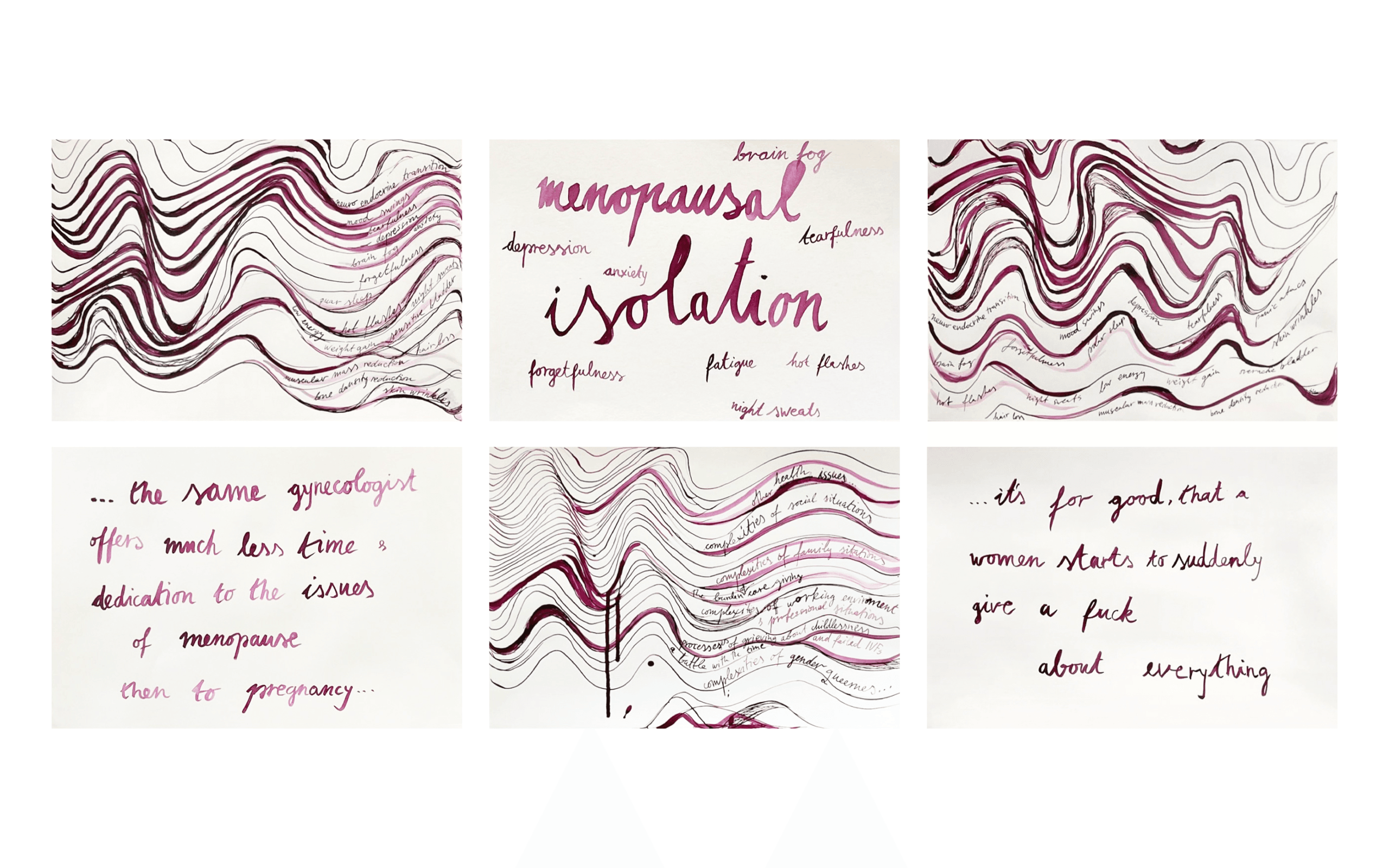
In the exhibition, How much strength it takes… Tanja Ostojić addresses and further develops these concerns through themes related to the relational nature of personal space; the manifestation of institutional power and control; intimacy as both a space and a process of reflecting on the (micro)politics of the body; women’s health, sexuality, and the inevitability of biological changes; as well as the emancipatory potential of collectivity expressed through poltics of care, solidarity, and the sharing of experience and knowledge concerning the conditions of migrant women, marginalized groups, and minorities.
The mid-career survey offers an overview of the artist’s practice—from sculpture to performance and to knowledge production in art—providing important insights into creative processes that engage questions of time, space, and the body, while also opening new perspectives on the categories of object and action, of permanence and ephemerality, of material and embodied perception. Through an exploration of the material dimensions of marble, steel, clay, textile, water, and the body itself, Tanja Ostojić conceives her artistic practice from a position of political agency, continuously and critically interrogating social matter, and how prevailing norms and patriarchal structures shape and organise both everyday life and global reality.
Tanja Ostojić’s thematic retrospective forms part of the program strand of the Gallery-Legacy of Milica Zorić and Rodoljub Čolaković, which offers focused insights into the poetics, strategies, and aesthetics of artists, re-evaluating their work through new interpretations.
On May 24th and 25th, 2026, Tanja Ostojić will lead a two-day workshop for women entitled Changed by Water: Menopausal Tea Party with Embroidery and Swimming, held in the courtyard of the Gallery-Legacy of Milica Zorić and Rodoljub Čolaković and at Lake Sava. The open call for participation in the workshop will be published on May 10, 2026. Pre-registration is required to secure a spot.
Tanja Ostojić (born 1972 in Užice) is an interdisciplinary and performance artist from Belgrade, based in Berlin. She is internationally recognised as a pioneer of institutional gender critique, particularly through her work in socially and politically engaged feminist art and the public space practices, with a special focus on the theme of migration. Her works have been the subject of numerous theoretical analyses and are included in a wide range of books, journals, and anthologies worldwide. Ostojić studied sculpture at the Faculty of Fine Arts, University of Arts in Belgrade (BA 1995, MA 1998), and visual arts at the École Regionale des Beaux-Arts in Nantes, France (1998–1999). As a fellow of the Graduate School at the University of the Arts in Berlin, Germany (2012–2014), she was a recipient of the “Albert Einstein” grant for interdisciplinary artistic research.
Since 1994, Ostojić has worked as an independent artist, active in the fields of research and education. She has received numerous awards, residencies, and grants. The Guardian recently named her among the 25 most important artists of the 21st century, in part for her project Looking for a Husband with an EU Passport (2000–05).
Her performances and exhibition practice have been presented, among other venues, at the Venice Biennale: in 2001 in the main exhibition curated by Harald Szeemann, in 2011 at the Roma Pavilion, and in 2024 at the Croatian Pavilion as part of Vlatka Horvat’s project. Her work has been exhibited widely in solo and group exhibitions, biennials, and festivals of performance, theatre, video, film, and digital arts, including: Brooklyn Museum, New York (2007); Busan Biennale, South Korea (2016); Pratt Manhattan Gallery, New York (2016); Deutsches Historisches Museum, Berlin (2015); Manifesta 2, Musée d’Histoire de la Ville de Luxembourg (1998); ART ACTION 16, Gothenburg (2021); Tallinn Art Hall (2021); HKW, Berlin (2024).
Major solo exhibitions have been held at: Depo, Istanbul (2022); Podroom Gallery, Cultural Centre of Belgrade (2021); Salon of the Museum of Contemporary Art, Belgrade (2004, 2017); Škuc Gallery, Ljubljana (2012); Kunstpavillon, Innsbruck (2008); Halle für Kunst, Luneburg (2003); La Box, Bourges (2003), Museum of Contemporary Art, Zagreb (2002). Her works are included in significant collections, including the Museum of Applied Arts, Vienna; Kontakt Collection, Vienna; Museum of Contemporary Art, Ljubljana; Museum of Contemporary Art, Belgrade; Museum of Contemporary Art of Vojvodina; and Neuer Berliner Kunstverein, Berlin.
As a visiting lecturer, Ostojić has taught at the University of Applied Arts in Vienna, as well as at art universities in Reykjavik and Berlin, and currently teaches students of social work at the University of Applied Sciences in Frankfurt am Main. She has delivered lectures and seminars at approximately 100 universities worldwide and has participated in numerous academic conferences in Serbia and internationally. She regularly publishes in professional journals and books.
More information about the artist:
Tanja Ostojić, website: https://tanjaostojic.com/
Curated by Miroslav Karić
The exhibition is generously supported by the Ministry of Culture of the Republic of Serbia and the Institut für Auslandsbeziehungen (ifa), Stuttgart.
The Museum of Contemporary Art, Belgrade, and Tanja Ostojić would like to thank the Terra Museum and the Museum of Contemporary Art of Vojvodina for the loan of works.